
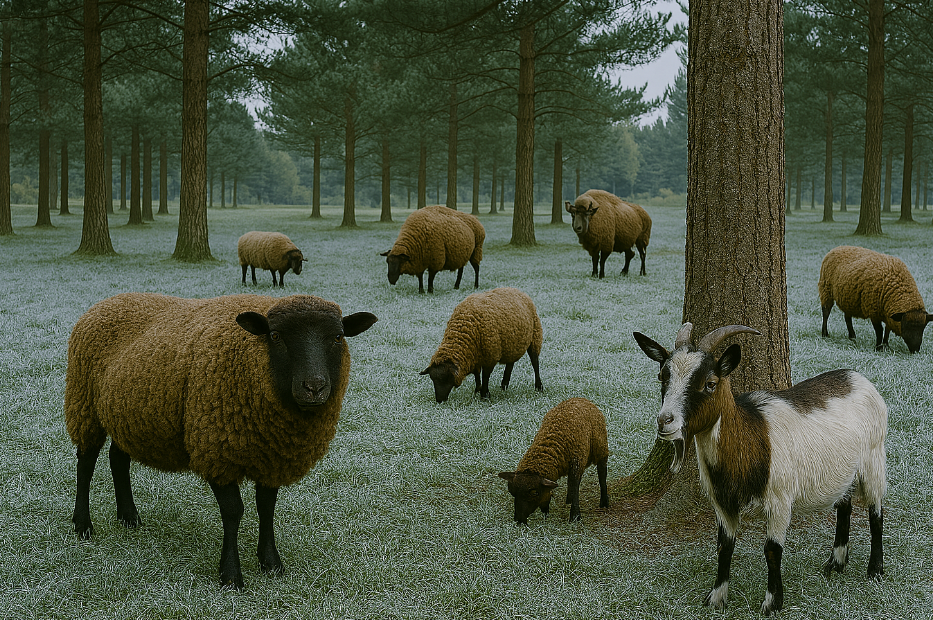
Latvia Agroforestry Integrating Livestock & Mushroom cultivation
Core Agroforestry Components
1. Silvopasture System
Integrating trees, forage, and livestock for mutual benefit.
Tree Species
Hazel, alder, birch, and oak: Nitrogen-fixing, fodder-producing, and mushroom-compatible.
Conifers (spruce, pine): Windbreaks and long-term timber.
Livestock
Sheep & goats: Browsers that complement forest understory management.
Pigs: Used for controlled rooting in designated zones.
Chickens & ducks: Pest control and egg production.
Benefits
Shade and shelter for animals.
Improved soil structure and carbon sequestration.
Diversified income streams.
2. Outdoor Mushroom Cultivation
Seasonal production using forest microclimates.
Species
Oyster (Pleurotus ostreatus): Thrives on hardwood logs.
Shiitake (Lentinula edodes): Grown on oak or beech logs.
Lion’s Mane (Hericium erinaceus): High-value gourmet and medicinal.
Method
Inoculated logs placed in shaded forest zones.
Rotational harvesting from spring to autumn.
Integrated with livestock rotation to avoid contamination.
3. Indoor Winter Mushroom Farming
Year-round production using spores and climate-controlled environments.
Infrastructure
Insulated shipping containers or retrofitted barns.
Humidity and temperature control systems.
HEPA filtration and UV sterilization for spore management.
Substrate
Agricultural waste (straw, sawdust, coffee grounds).
Supplemented with bran or gypsum for nutrient balance.
Cultivation Cycle
6–8 week rotation per batch.
Continuous inoculation using liquid culture or grain spawn.
Automated misting and CO₂ monitoring.
Compliance & Certification
EU Organic Certification: For mushrooms, livestock, and agroforestry produce.
Forest Stewardship Council (FSC): For sustainable timber and mushroom logs.
Latvian Food and Veterinary Service (PVD): For processing and export licensing.
HACCP: For indoor mushroom production and drying facilities.